
Project scope
Built a stylized rendering setup in UE 5.6 using supplied character geometry and textures. The work covers regional materials, face shadows, eye parallax, fabric shading and post-processing. A fixed character pose is shown from different views and lighting conditions. The base model and textures were supplied.
Material regions and lighting
Color, normal and packed textures feed regional material functions. Custom HLSL computes toon lighting, highlights and rim light. The combined result is written to Emissive. A runtime component synchronizes the direction, intensity and color of the presentation lights. Shared functions reuse shading logic, while material instances control each region. Separate post-process materials handle outlines and display treatment.
Face shadows and outlines
A face-shadow control texture combines head orientation with the key-light direction to define the toon boundary. Character depth capture and screen-space masks handle bangs shadows. A separate layer displays the brows and eyes, with depth and stencil masks restricting visibility. The outline pass reads Custom Depth and Stencil. Region masks and depth offsets control line width and breaks.
Eye refraction and pupil parallax
The tangent-space view ray is refracted through an approximate corneal surface and intersected with a shallow iris depth surface. HLSL uses three fixed iterations and a smooth radial displacement limit. An edge mask bounds the effect, and surface highlights are computed separately. The comparison disables depth and parallax while retaining the same horizontal camera motion.
Knit detail and fiber coverage
Textures and micro-normals retain the vertical knit pattern. Thirty-two curved shell layers form the fibers, with layer indices driving vertex expansion. Procedural coverage controls fiber roots, tips and length variation. Grazing and backlight terms enhance light at the edges. A diagonal weave adds tie detail, with distance-based attenuation to reduce aliasing.
Layered fabric shading
Base coverage, a view-dependent term and a vertical texture gradient determine fabric coverage. This mixes skin and fabric layers before adding soft highlights and a Fresnel response. The original textures preserve weave and seams. The skin-through-fabric appearance is approximated with layered shading.
Light roles and color control
The key light defines toon shading, the fill lifts shadows and the rim light emphasizes edges. Ambient fill controls the overall tone. A Fresnel term enhances grazing edges, with a height mask controlling its distribution. Warm and cool setups retain consistent exposure and material regions. Shell layers, depth capture and screen-space post-processing add cost and can be adjusted to suit the presentation.
Demonstration video
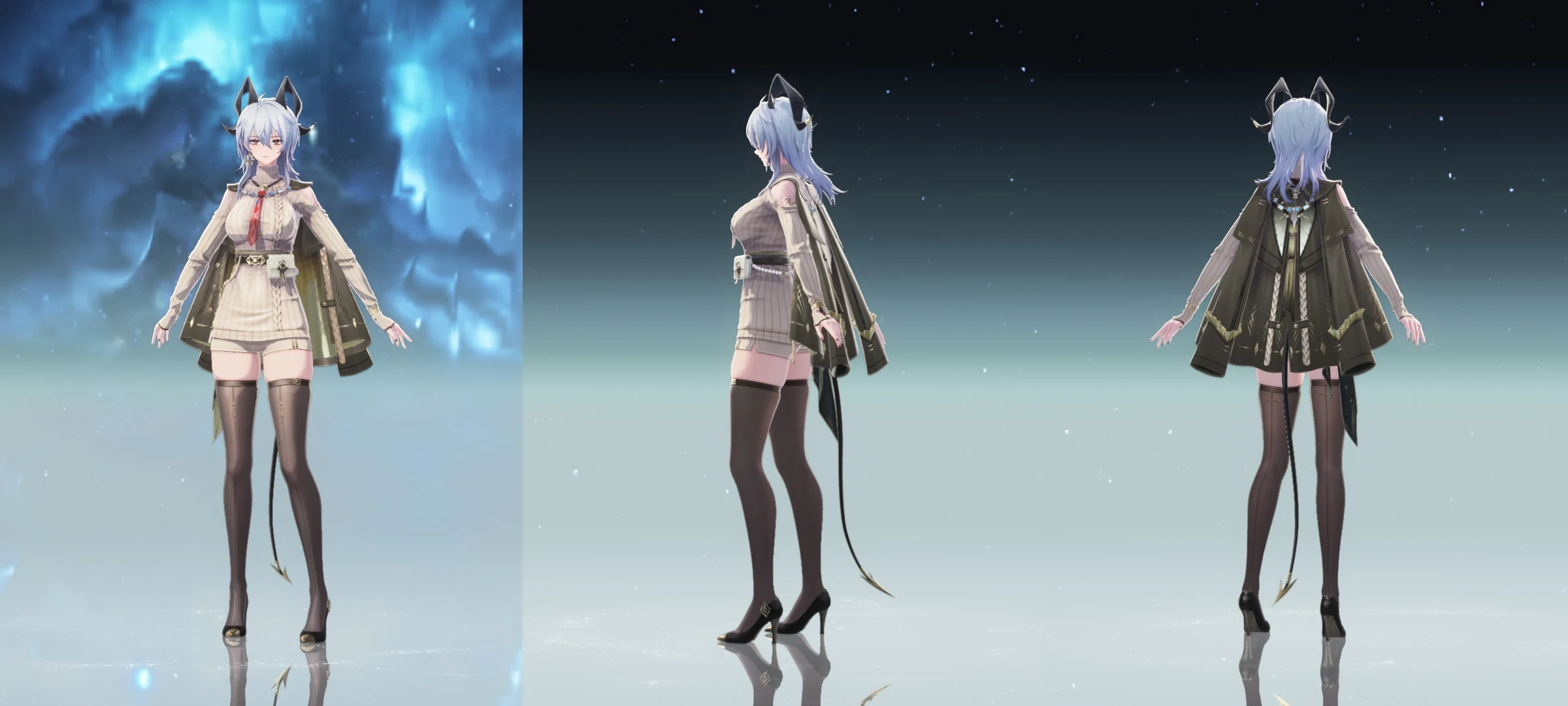
Technical content adapted from the author’s portfolio and project files.